

The explosion of stars towards the end of their lives is extraordinary; there is a sudden increase in their brightness and an enormous release of energy. This is a ‘supernova’ and it releases in 10 secs and 10 times the power than the Sun releases in its entire life. After a star’s detonation, a gaseous remnant remains and this expands and shines for millions of years throughout the galaxy. It is estimated that two supernovas explode each century in the Milky Way.
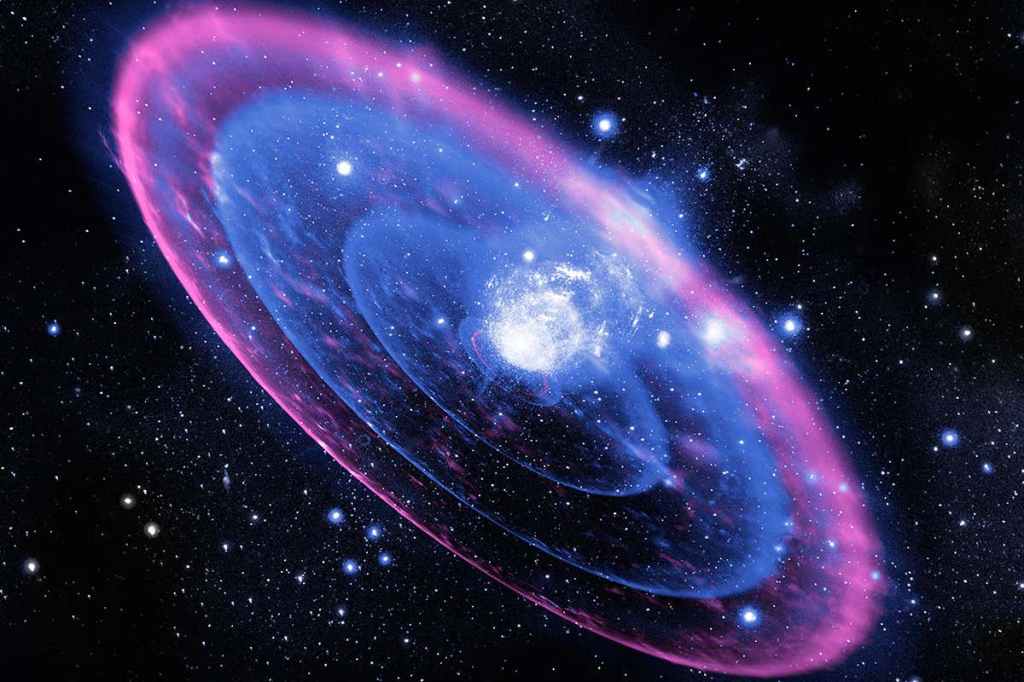
In 1604, Johannes Kepler discovered the last observed supernova in the Milky Way. NASA’s Chandra telescope discovered the remains of a more recent supernova. It exploded in the Milky Way more than a hundred years ago.
NASA scientists use different types of telescopes to look for and study supernovas. Some telescopes are used to observe the visible light from the explosion. Others record data from the X-rays and gamma rays that are also produced. Both NASA’s Hubble Space Telescope and Chandra X-ray Observatory have captured images of supernovas.












 Know It All and Everything