
SUPERNOVA

The explosion of stars towards the end of their lives is extraordinary; there is a sudden increase in their brightness and an enormous release of energy. This is a ‘supernova’ and it releases in 10 secs and 10 times the power than the Sun releases in its entire life. After a star’s detonation, a gaseous remnant remains and this expands and shines for millions of years throughout the galaxy. It is estimated that two supernovas explode each century in the Milky Way. 
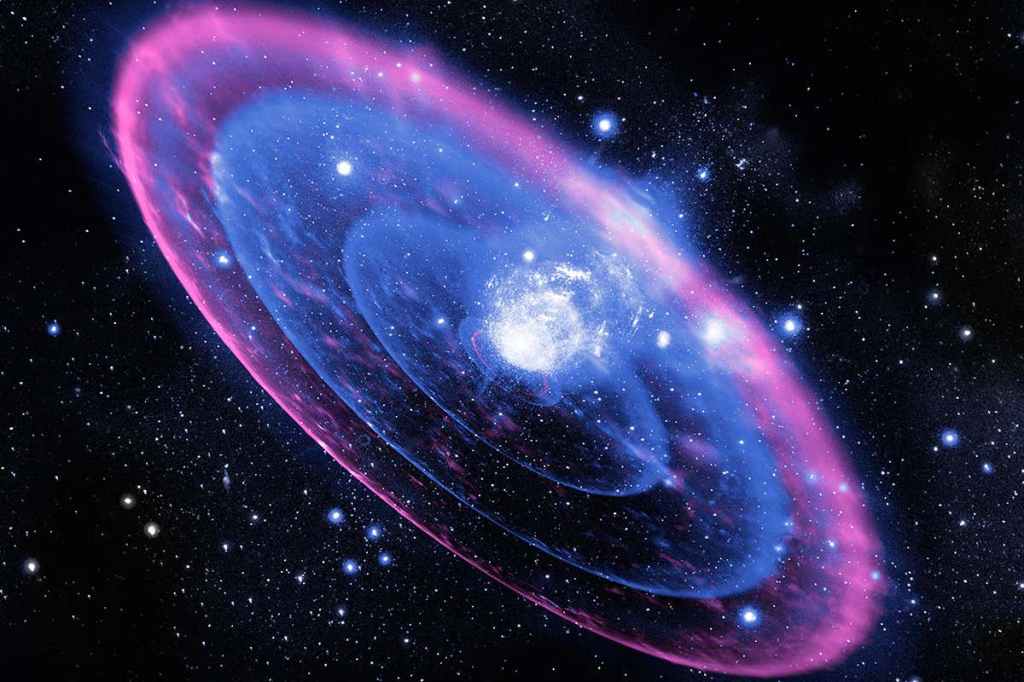
Image shows supernova explosion

In 1604, Johannes Kepler discovered the last observed supernova in the Milky Way. NASA’s Chandra telescope discovered the remains of a more recent supernova. It exploded in the Milky Way more than a hundred years ago.

NASA scientists use different types of telescopes to look for and study supernovas. Some telescopes are used to observe the visible light from the explosion. Others record data from the X-rays and gamma rays that are also produced. Both NASA’s Hubble Space Telescope and Chandra X-ray Observatory have captured images of supernovas.
EARTHQUAKES

Earthquakes causes the ground to shake, and occur when there is a sudden movement in the Earth’s crust. They happen in areas where two of the Earth’s plates meet under the ground

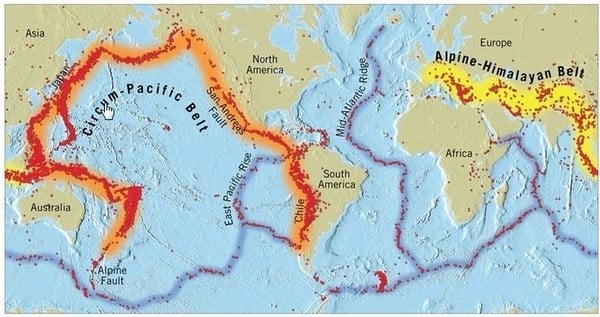
Earthquakes closely follow the borders of the Earth’s plates.

earthquake areas

Most earthquakes occur around the edges of the Pacific Ocean or in mountainous areas such as the Himalayas. It is here that the plates under the Earth’s surface are pushing or sliding the most. Scientist monitor these areas to try to predict earthquakes, measuring for possible warning signs- such as minor tremors that might build up to a larger event.

measuring earthquakes

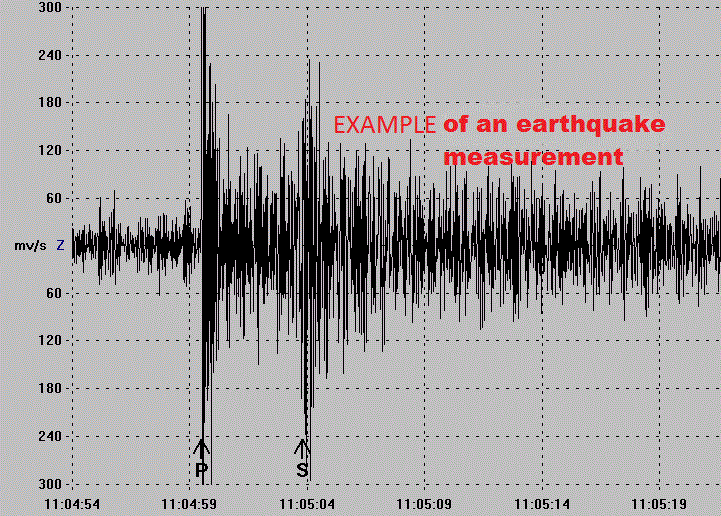
Instruments called seismographs measure earthquakes. A seismograph detects the shock waves produced and displays a line that records how strong each wave is.

FACTS…FACTS…FACTS!!!

The Richter Scale has 10 numbers representing the energy produced by an earthquake. Each number represent 10 times more energy than the previous number.

SCALE EFFECTSFREQUENCY
0 – 2.0 Not Felt 8 000 a day approx.
2.0 – 2.9 Not felt but recorded 1 000 a day approx.
3.0 – 3.9 Felt but no damage 49 000 a year approx.
4.0 – 4.9 Felt slightly indoors 6 200 a year approx.
5.0 – 5.9 Weak buildings might fall800 a year approx.
6.0 – 6.9 Destructive up to 160km away 120 a year approx.
7.0 – 7.9 Severe damage in large area 18 a year approx.
8.0 – 8.9 Severe damage over 1 000km 1 a year approx.
9.0 – 9.9 Devastation up to 10 000km 1 in 120 years approx.
10 Has never been recorded
Shows seismograph readout.